Vinea is being designed with Dutch high-wire tomato growers, not for an idea of one. If you grow trostomaat in the Netherlands, your house is in scope — owner-operated or a group, five hectares or fifty.
What the harvest costs
The figure below came from a grower, in an interview, and it is harvesting labour only — not total crop labour. It is the reason this company exists, and it is also the bar a machine has to clear. The fifty-hectare operator we spoke to pays less per square metre, but gave the number all-in, so it is not published here.
For reference, the public figures point the same way: a WUR labour budget puts 1,857 hours per hectare per year on the pipe-rail harvesting line, and the glasshouse scale wage from 1 January 2026 starts at €14.71 an hour before employer burden.
“The robots I've seen cut the vine and drop the fruit.”
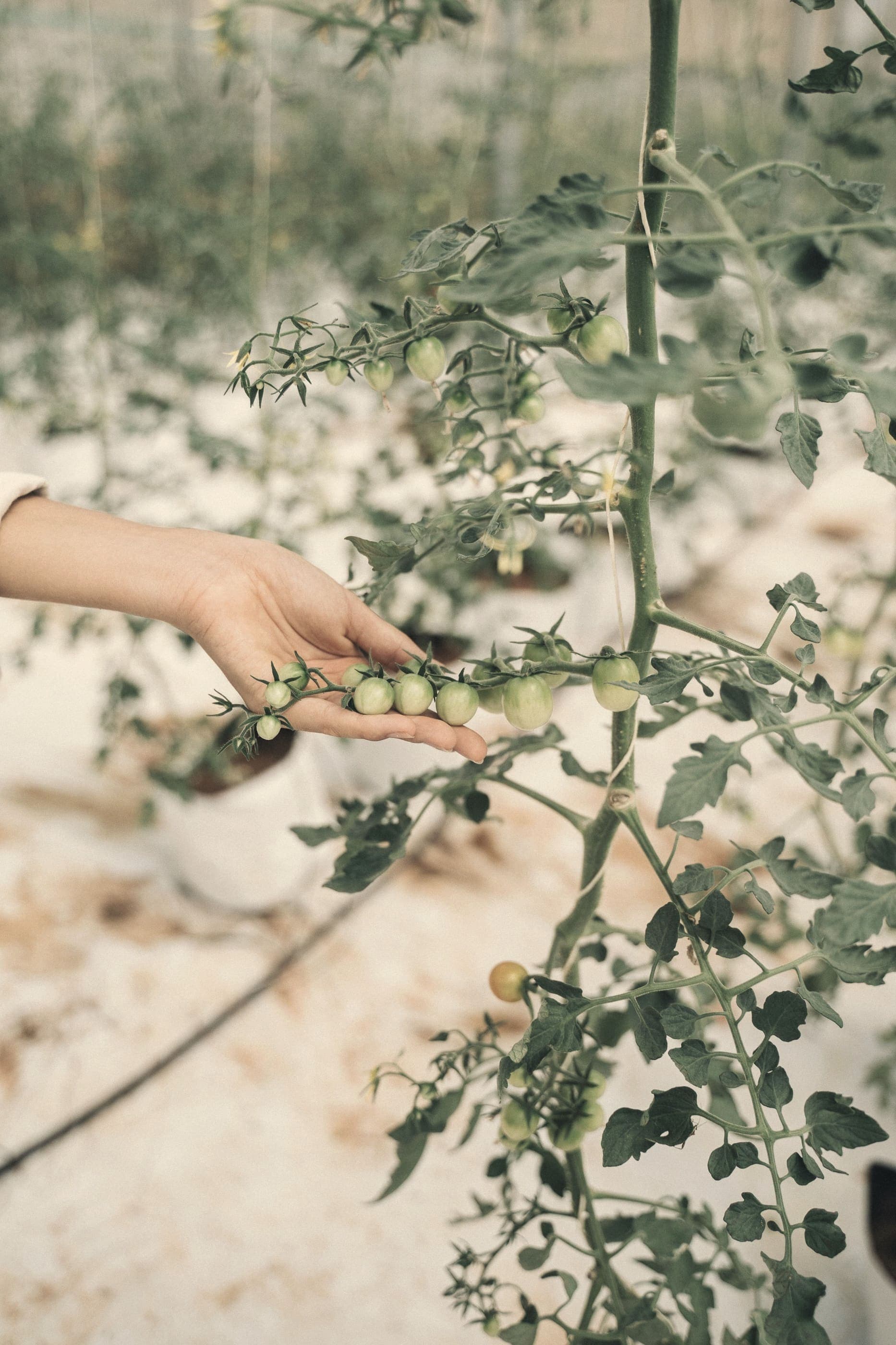
A fifty-hectare grower said that to us, from direct experience, and added that the machines ran at roughly five percent of a person. We are not going to argue with him. The tool is designed around exactly that failure — the truss is supported from below before anything is cut, so the fruit is never what is being held. On speed, we have nothing to show yet and will not pretend otherwise.
What a pilot would look like
Not yet, and honestly said: there is no machine to put in your house. What is useful now is the conversation that shapes it.
A conversation
Forty minutes. Your harvest hours per hectare per week, your real loaded hourly cost, and the physical numbers of your rows — path width, rail height, truss spacing, stem length.
A design your house fits
The machine is dimensioned from real houses. Every set of numbers changes it while changing it is still cheap.
A row, later
When there is hardware, the first houses it runs in are the ones that shaped it. One row, your crop, your judgement of whether the trusses are packable.
What we cannot tell you yet
- How fast it picks. No figure exists that we would defend.
- What it costs. Renting by the month is the intent; the price is provisional until a pilot prices it.
- When. There is no hardware, so any date would be a guess dressed as a plan.
- How well it handles your variety, your truss spacing and your leaf density. That is what the conversation is for.